
There is a lot of confusion and misinformation right now
Recent FCC actions on foreign-adversary-controlled test labs, Covered List components, and non-compliant VHF/UHF imports have produced a flood of claims. Some are accurate. Many are oversimplified or wrong. Licensed amateurs who are trying to do the right thing are left unsure whether the radios already in their shacks are suddenly “illegal.”
Common assertions circulating in videos, social threads, and club discussions include:
- “Any Chinese radio with only a Part 15B grant is illegal.”
- “If it doesn’t have a Part 90 sticker it can’t be used on the ham bands.”
- “The FCC is banning all Baofengs / all Chinese radios / all cheap HTs.”
- “Used or older radios are suddenly non-compliant because of new rules.”
- “Homebrew or modified gear is now forbidden.”
None of those statements is correct as written. This paper is for the licensed amateur who wants to stay on the right side of the rules, understand what the grants actually say, and know how to check the radios already owned or being considered for purchase. It is not a defense of every cheap import, nor an attack on any brand. It replaces rumor with the structure of Parts 15, 90, 95, and 97 and with the actual language on publicly available FCC grants.
Summary for the practicing ham
A radio designed and sold for use solely under Part 97 is not required to hold a transmitter authorization under Parts 90 or 95. What it does need is Part 15B compliance for its receiver and digital circuitry. That is exactly how the major Japanese manufacturers authorize their popular HF/VHF/UHF radios.
The Icom IC-7100, Yaesu FT-991A, Kenwood TS-890S, and earlier Kenwood TS-590 series are all certified primarily as Scanning Receivers under Part 15B. They include (or reference) cellular-rejection / §15.121 material and, in many cases, explicit Amateur or manufacturer attestations. No serious observer claims these radios are illegal. The same framework applies to properly disclosed Chinese amateur radios.
Problems arise when a manufacturer files only a CSR / Part 15B grant and then markets the radio as a multi-service Part 90 or Part 95 transceiver capable of transmitting outside amateur allocations as shipped, or when an old FCC ID is reused across hardware revisions that incorporate Covered List components without new testing.
Used equipment and homemade/modified equipment are treated differently under the rules from brand-new gear being marketed and sold. Those distinctions matter and are covered below.
1. Part 15B is the only mandatory certification for a pure Part 97 radio
Under 47 CFR Part 97, an amateur station may use any transmitter that meets the technical standards in §97.307. There is no requirement that the transmitter itself hold a Part 97 equipment authorization. The licensed operator is responsible for the station’s compliance.
What is required for any modern radio that contains digital circuitry and a wideband receiver is Part 15 Subpart B compliance (unintentional radiators / scanning receivers). Most HF/VHF/UHF amateur transceivers therefore appear in the FCC database under the equipment class CSR – Scanning Receiver with Rule Parts listed as 15B. Transmit capability for amateur use is typically disclosed via an Amateur Attestation, a manufacturer declaration, or simply by the device description and frequency notes on the grant.
2. Precedent from major manufacturers
Looking only at a single radio invites the objection that it is an outlier. It is not. The same authorization pattern appears across the major Japanese manufacturers whose products fill most U.S. shacks.
Part 15B versus Part 15C. Most amateur transceivers are intentional transmitters on amateur allocations, but the FCC files them under Part 15 Subpart B because the receiver and digital circuitry are unintentional radiators. That is the normal path for a pure Part 97 radio. Part 15 Subpart C applies to intentional transmitters operating in unlicensed bands, for example Bluetooth, Wi-Fi and other short-range devices. A radio that includes Bluetooth or Wi-Fi therefore also needs Part 15C authorization for those functions, normally granted alongside its Part 15B filing. The presence of Part 15C does not replace Part 15B, and a 15B-only grant does not authorize intentional transmission in unlicensed bands. When checking a radio, read the rule parts on the grant for each function rather than assuming one entry covers everything.
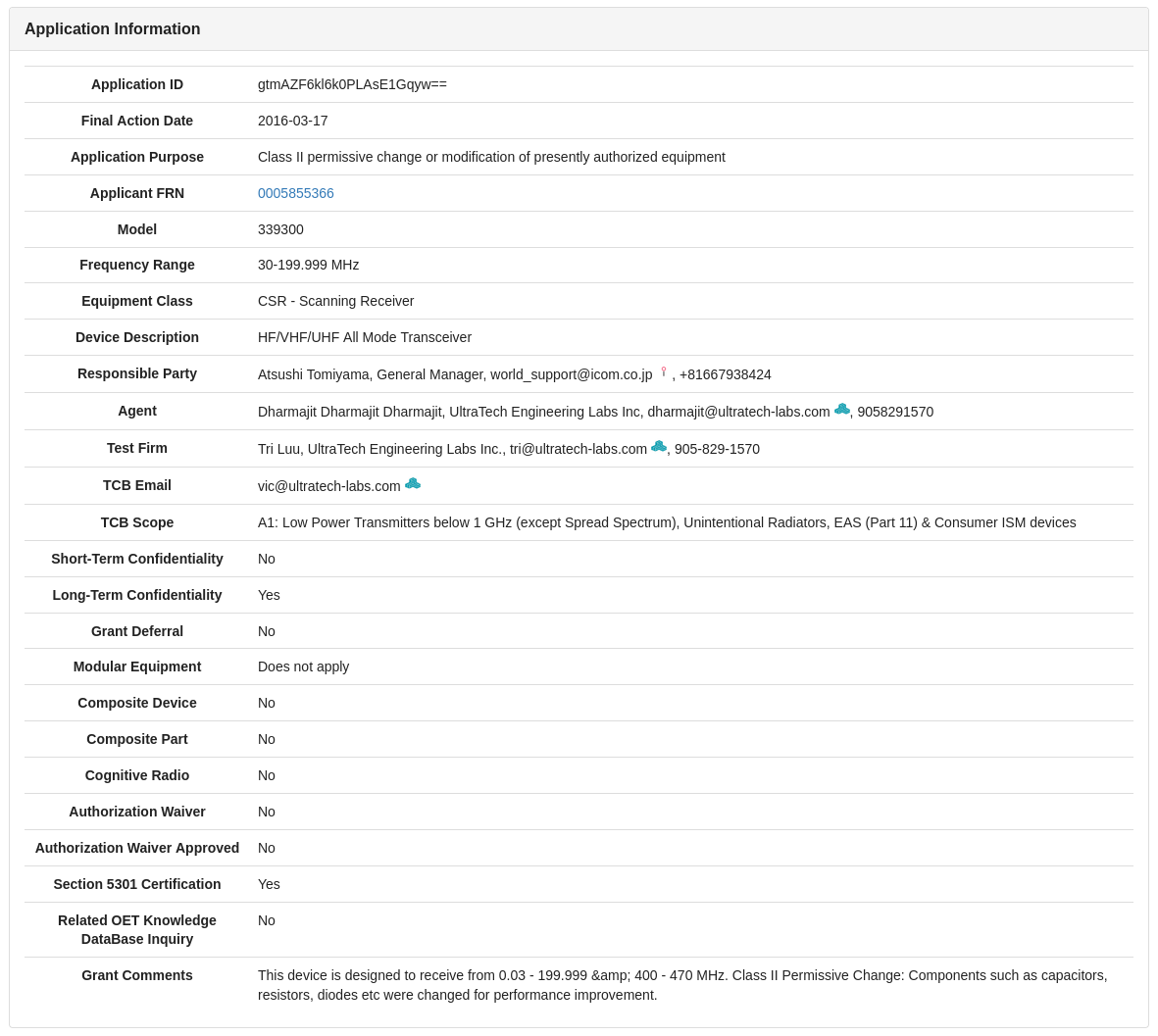
Icom IC-7100, AFJ339300
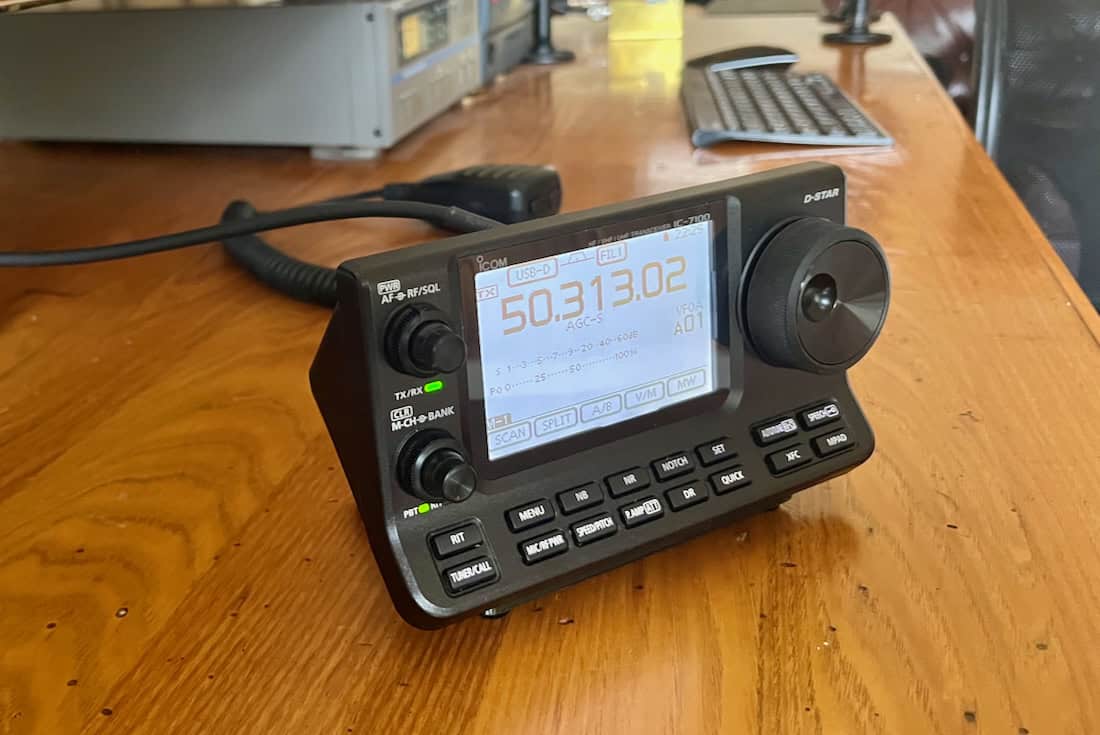
- Equipment Class: Scanning Receiver (CSR)
- Rule Parts: 15B
- Explicit Amateur Attestation and Part 15.121 / Part 15B declarations
- Class II permissive change documenting component substitutions
Full exhibits: fccid.io/AFJ339300
Yaesu FT-991A, K6620575X50
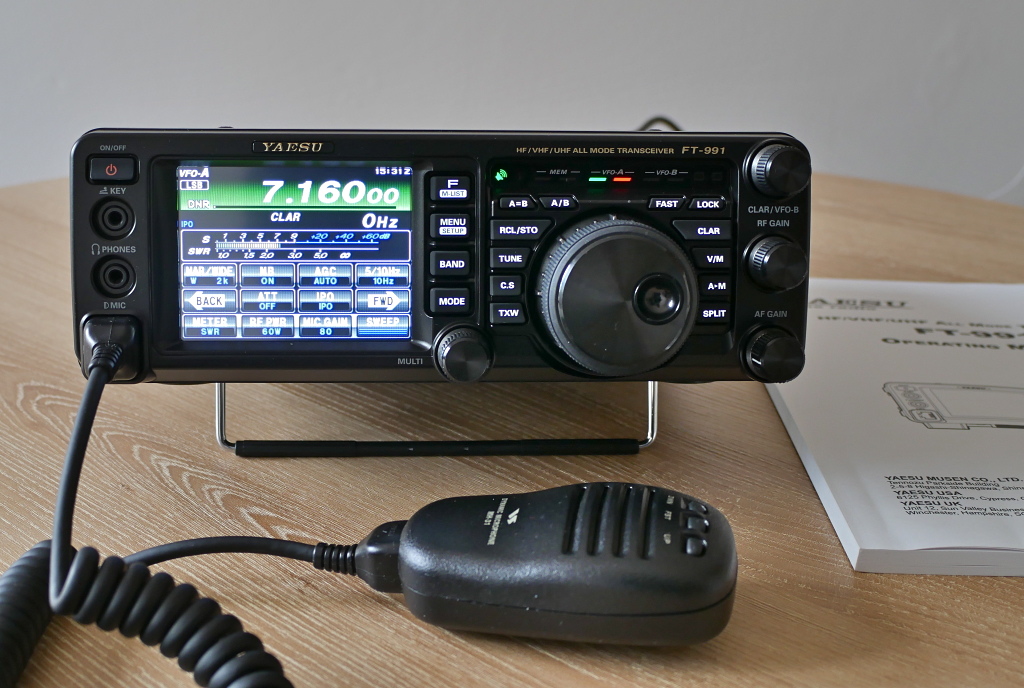
- Tested and granted under FCC Part 15 Subpart B (CSR)
- Multiple CSR and digital-device test reports
- 15.121 material present in the filing history
Kenwood TS-890S, K44512001
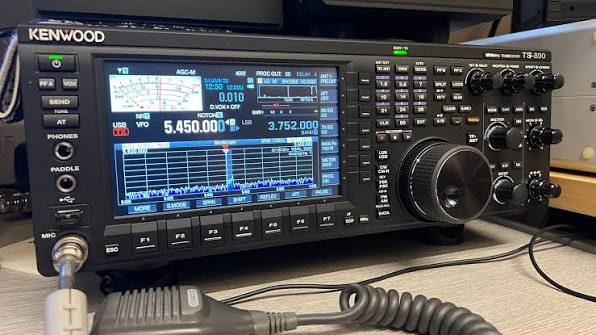
- Treated as HF/50 MHz transceiver / scanning receiver under Part 15B
- Explicit “Letter of Attestation” for §15.121(a)
- Earlier TS-590 series: grant notes state the device is located in an Amateur Radio
The major manufacturers do not obtain Part 90 or Part 95 transmitter authorizations for radios intended only for Part 97. They use Part 15B / CSR plus supporting attestations-the same path available to any manufacturer that stays within amateur transmit limits and discloses honestly.
3. Comparison table of popular radios
| Brand / Model | FCC ID (example) | Class / Rule Parts | Amateur / 15.121 Attestation | Notes |
|---|---|---|---|---|
| Icom IC-7100 | AFJ339300 | CSR / 15B | Yes (Amateur + 15.121) | Class II change documented |
| Yaesu FT-991A | K6620575X50 | CSR / 15B | Yes (15.121 material) | All-mode HF/VHF/UHF |
| Kenwood TS-890S | K44512001 | CSR / 15B | Yes (explicit 15.121 letter) | Strong disclosure example |
| Kenwood TS-590 series | K44407100 | CSR / 15B | Yes (grant notes + reports) | “Device is located in an Amateur Radio” |
| TYT TH-9800 | PODTH-9800 | CSR / 15B | Present (amateur transceiver framing) | Quad-band mobile |
| Radtel (various) | 2AZSA-RT950 / RT900 | CSR / 15B | Yes (Amateur Radio + 2.911) | Recent filings explicitly “Amateur radio” |
| Baofeng / Pofung (newer) | 2AJGM series | CSR / 15B or Amateur | Varies; some Declaration letters | Mixed history; newer better |
| Classic UV-5R era | 2AJGM-UV5R / ZP5 variants | Often CSR / 15B | Often minimal / marketing mismatch | Source of much controversy |
Illustrative. Always open the actual grant and exhibits for the specific FCC ID on the unit you are evaluating.
4. Brands with a history of including attestations
| Brand / Group | Typical practice | Consistency |
|---|---|---|
| Icom (AFJ) | CSR + Amateur Attestation + 15.121; Class II changes when components change | High |
| Yaesu | CSR / Part 15B reports; 15.121 material in many filings | High |
| Kenwood (K44) | Explicit Letter of Attestation for §15.121 on recent HF radios | High |
| Radtel (2AZSA) | Filings titled “Amateur radio”; 2.911 attestations; CSR | Good / improving |
| TYT / Tytera | Higher models framed as amateur transceiver; CSR | Generally good on higher models |
| Wouxun (selected U.S. models) | Transmit-limited versions via established dealers; clean Part 15B | Model-dependent |
| BTECH | Higher-tier limited models better than ultra-budget clones | Mixed |
| AnyTone | Real Part 90 when claimed; pure amateur usually CSR | Generally careful on higher-end |
| Baofeng / Pofung | Wide variation; newer “Amateur Radio” filings better | Inconsistent, check the ID |
| Generic / ultra-budget | Bare CSR or reused ID; marketing claims Part 90/95 | Low, highest risk |
5. Used equipment and homemade / modified equipment
Much current anxiety treats every radio as if it were a brand-new device being imported and marketed today. Part 97 and the equipment-authorization rules draw important distinctions.
Used / previously authorized equipment
A radio that was properly authorized (or that required no transmitter authorization because it was a pure Part 97 device) when first placed into service does not automatically become illegal because later rules tightened testing-lab recognition or expanded the Covered List. The operator’s ongoing obligation is to keep the station compliant with the technical standards in Part 97 (especially §97.307) and to operate only on frequencies and with power levels authorized by the license class.
If you own a used Japanese or higher-tier Chinese radio that has always been operated only on amateur bands and meets spectral-purity expectations, continuing to use it on the ham bands is the normal situation. If the radio is an unlocked multi-service HT that can easily transmit on public-safety or GMRS channels, the compliance risk is higher-not because the radio is “banned,” but because accidental or intentional out-of-band operation is easy.
Homemade, kit, and modified equipment
Part 97 has always contemplated homebrew and modified equipment. The amateur service is one of the few radio services in which the licensee is expected to be able to construct or alter transmitting apparatus. The limits are technical (spurious emissions, frequency stability, power), not a requirement for an FCC ID on every home-built transmitter.
Modifying a commercial radio can void any equipment authorization the original device held and can turn a previously compliant Part 90/95 radio into something no longer authorized for those services. On the amateur bands the question reverts to whether the resulting station meets §97.307 and is operated within the privileges of the license.
6. When a radio claims Part 90 or 95 but the grant is only CSR
Part 90 and Part 95 require transmitter authorization. Typical equipment classes are TNB, TNF, FRF, or similar. The grant lists power, emission designators, frequency tolerance, and occupied bandwidth.
If a radio is marketed as “Part 90 approved” or “GMRS ready” yet the only grant on file is a CSR / Part 15B Scanning Receiver entry with no transmitter parameters, the device was almost certainly imported under the amateur / Part 15B pathway and then sold for services it is not authorized to serve.
7. FCC ID reuse, revisions, and Covered List components
A separate problem is the reuse of an existing FCC ID across hardware revisions without a new application or proper permissive change. When those revisions incorporate RF components or modules later placed on the FCC Covered List, the original grant no longer accurately describes the device being imported. Icom’s IC-7100 filings illustrate the correct approach: component changes triggered a Class II permissive change and updated test reports. Many low-cost makers skip that step.
8. Chinese brands: vetted examples vs. problem categories
8.1 Brands / models that generally appear more careful
- Radtel (2AZSA), Recent filings explicitly “Amateur radio” under CSR / 15B with supporting attestations.
- TYT / Tytera, TH-9800 family framed as receiver portion of an amateur transceiver; CSR / 15B.
- Selected Wouxun models sold through established U.S. dealers that ship transmit-limited to amateur bands.
- Higher-tier BTECH limited models (distinct from the cheapest unlocked UV-5R clones).
- AnyTone higher-end models that actually hold Part 90 grants when claimed; pure amateur offerings usually filed as CSR.
Medium-priced Chinese mobiles and HTs are far more likely to have coherent filings than the $25–35 no-name units.
8.2 Highest-risk categories
- Ultra-cheap dual-band HTs sold fully unlocked (or trivially unlockable) that carry only a Part 15B CSR grant yet are advertised for GMRS, MURS, or business use.
- Radios whose labeled FCC ID does not match any grant, or matches a grant for a different device.
- Sellers who will not provide an FCC ID or simply claim “FCC certified” without a searchable record.
- Marketing that shows Part 90 / Part 95 frequency lists as factory defaults while the grant is purely CSR / 15B.
9. Practical compliance checklist for your shack

- Find the FCC ID on the label or in the manual (if it has one).
- Look it up on fccid.io.
- Note the Equipment Class and Rule Parts on the grant.
- Open any attestation, declaration, or 15.121 letters in the exhibits.
- Compare the authorized frequencies and power with what the radio can actually transmit as configured.
- If the radio can easily transmit outside amateur allocations, either lock it down, use it only on amateur frequencies with discipline, or treat it as higher risk.
- For homebrew or heavily modified gear, focus on measured spectral purity and §97.307 rather than hunting for an FCC ID.
- Keep a simple note of what you checked and when-useful if questions ever arise.
The goal is not perfect paperwork on every 1980s boat-anchor. The goal is that a licensed amateur can demonstrate ordinary care: the radios in regular use are either properly framed for Part 97 or are being operated strictly within amateur privileges and technical standards.
10. References and primary sources
- Icom IC-7100, fccid.io/AFJ339300
- Yaesu FT-991A, fccid.io/K6620575X50
- Kenwood TS-890S, fccid.io/K44512001
- Kenwood TS-590 related, fccid.io/K44407100
- TYT TH-9800, fccid.io/PODTH-9800
- Radtel examples, 2AZSA-RT950, 2AZSA-RT900
- 47 CFR Part 15 Subpart B and §15.121; Part 97 (especially §97.307); Parts 90 and 95
- FCC Enforcement history on non-compliant VHF/UHF radios
- RadioReference Wiki – Budget and Entry Level Transceivers
- fccid.io, primary verification tool